

Find the market with the right breakout structure, build a strategy without code, and backtest it in AmiBroker as an AFL formula. Every strategy's tested in BreakoutOS before it reaches your Analysis window.
The creators of BreakoutOS have been featured on
















The research happens in BreakoutOS. The finished strategy lands in AmiBroker as an AFL formula you can backtest in the Analysis window and apply to a chart.
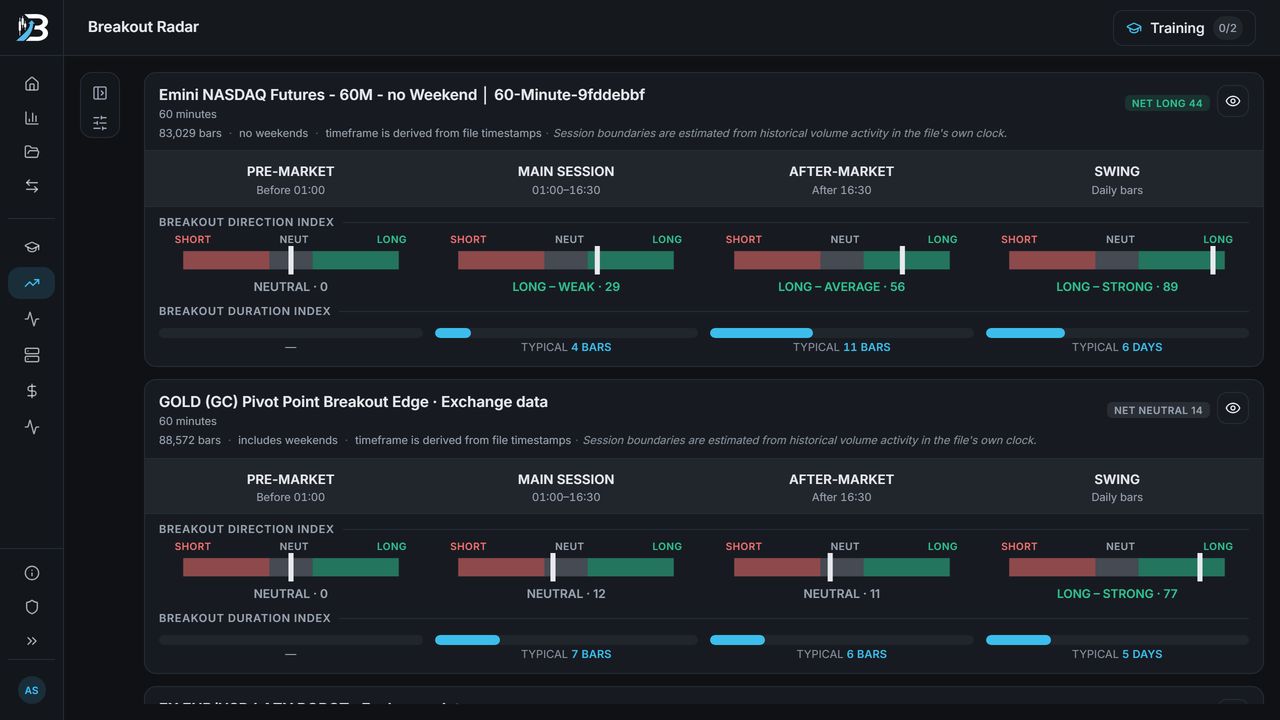
Breakout Radar scores each session of a market for breakout direction and how long breakouts typically last, so you start where the structure's there.
 Hypothetical backtest
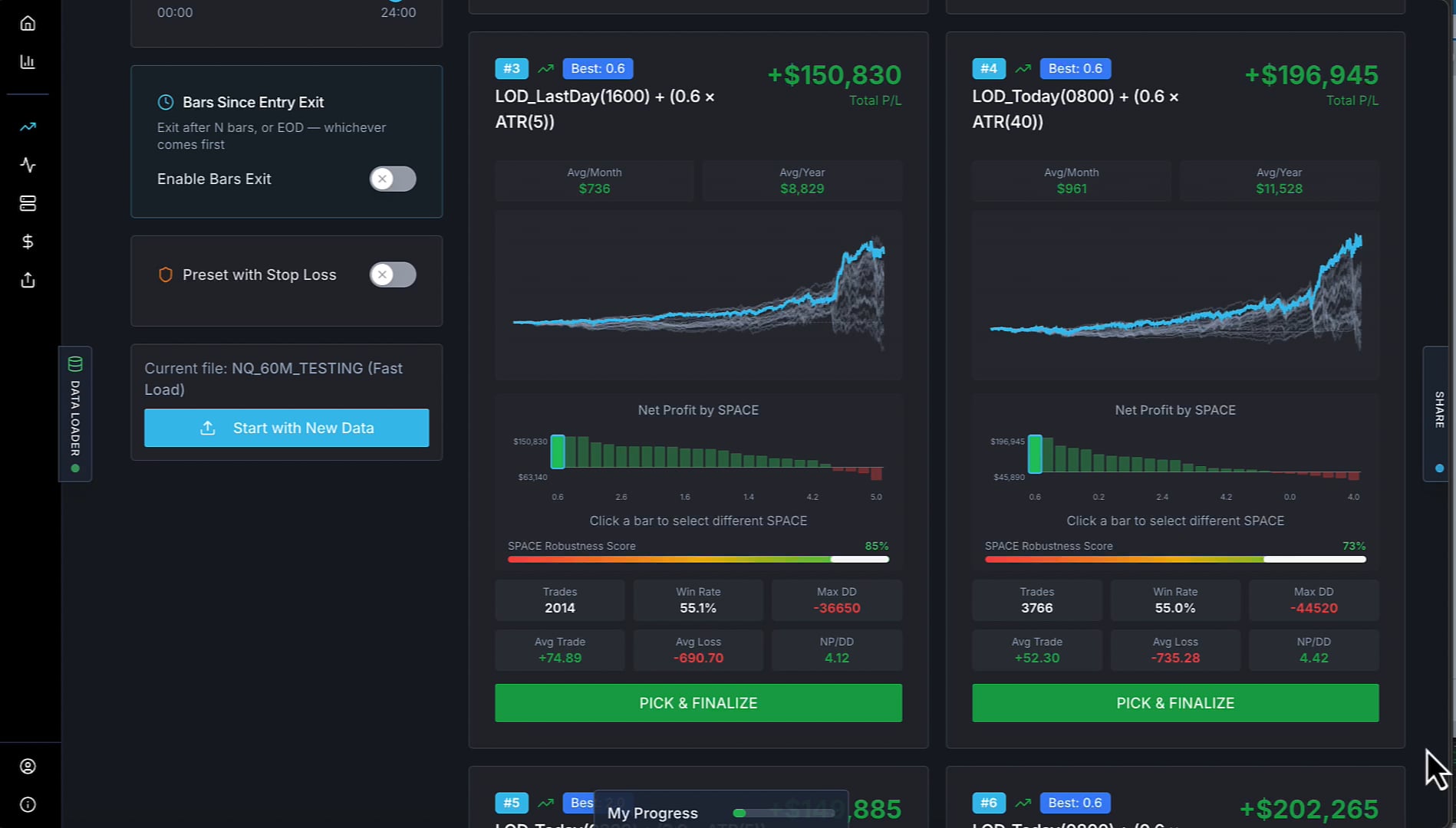
Breakout Trading PRO builds and tests breakout strategies for that market, point-and-click, using the Mr Breakouts Formula. Pick the one you want to take further.
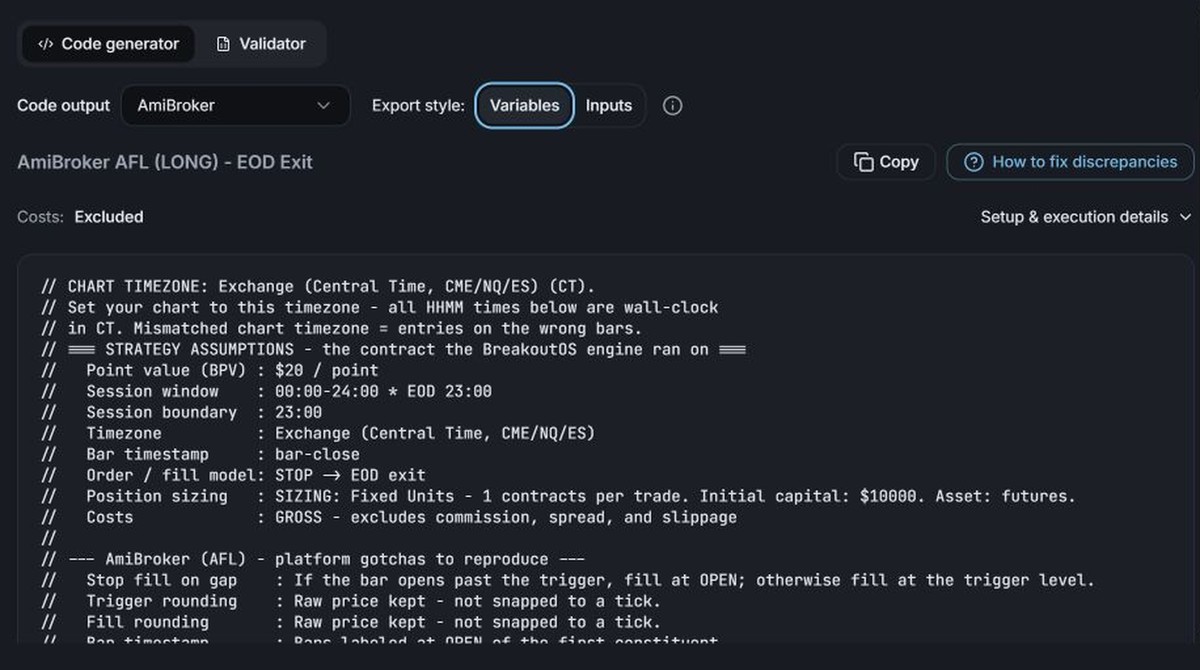
The export writes the strategy as an AmiBroker AFL formula. The header lists the session and timezone settings to match.
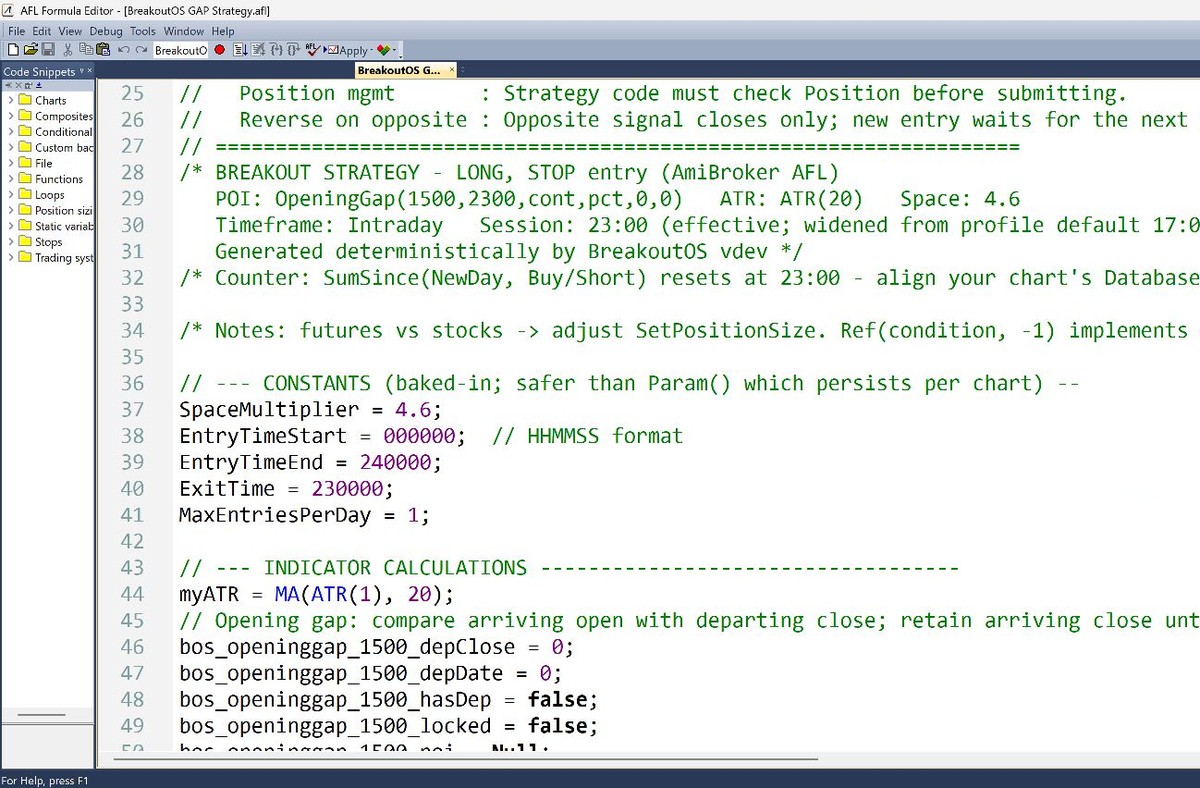
Paste it into the AFL Editor and save it. Then run a backtest from the Analysis window, like any formula you'd written yourself.
4 quick questions. Then you'll see which BreakoutOS tools fit how you trade, and what to do next.
One strategy, backtested in BreakoutOS, then exported and backtested again in AmiBroker. The AFL export reproduces the BreakoutOS results closely, so the system you run is the strategy you researched.
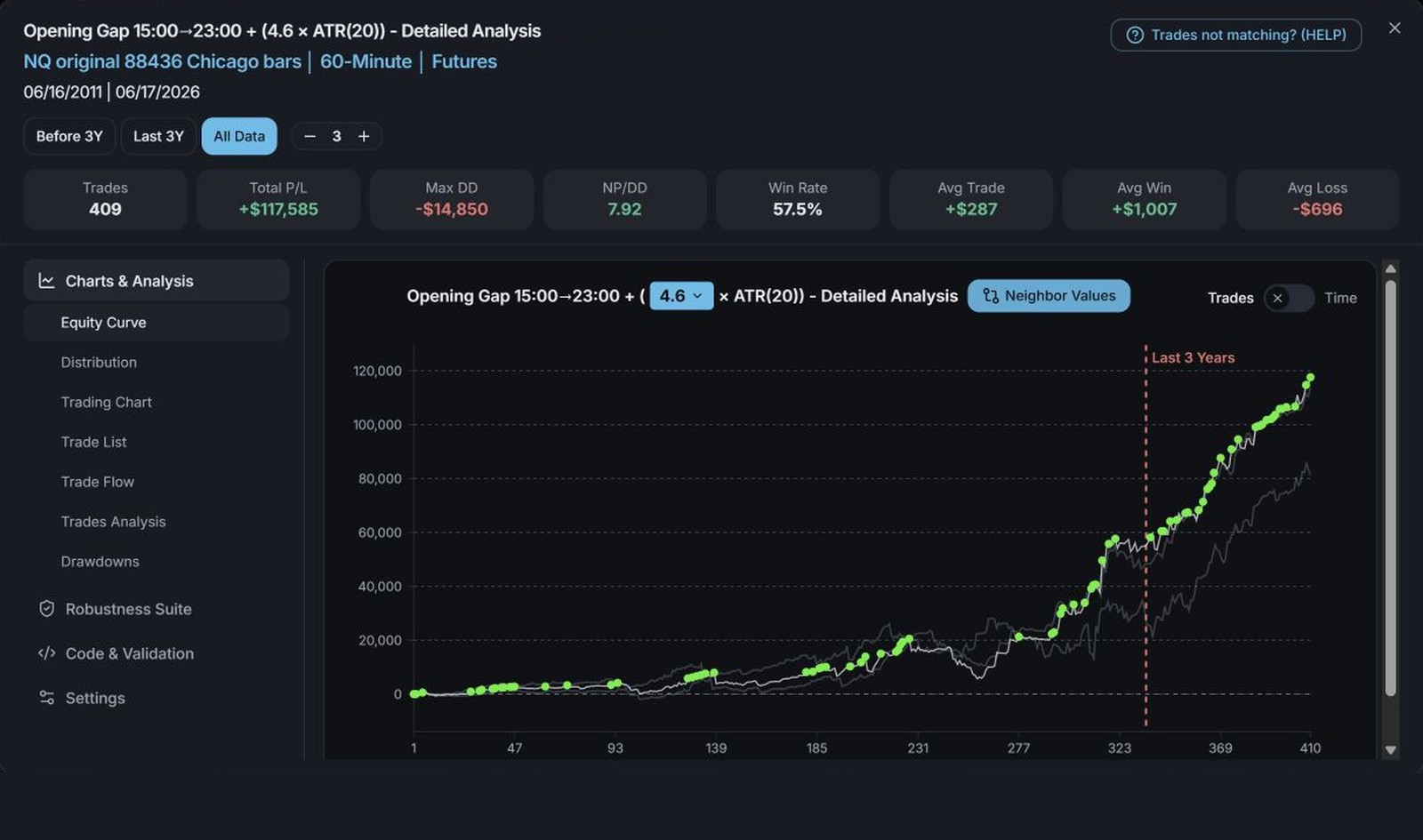 Hypothetical backtest
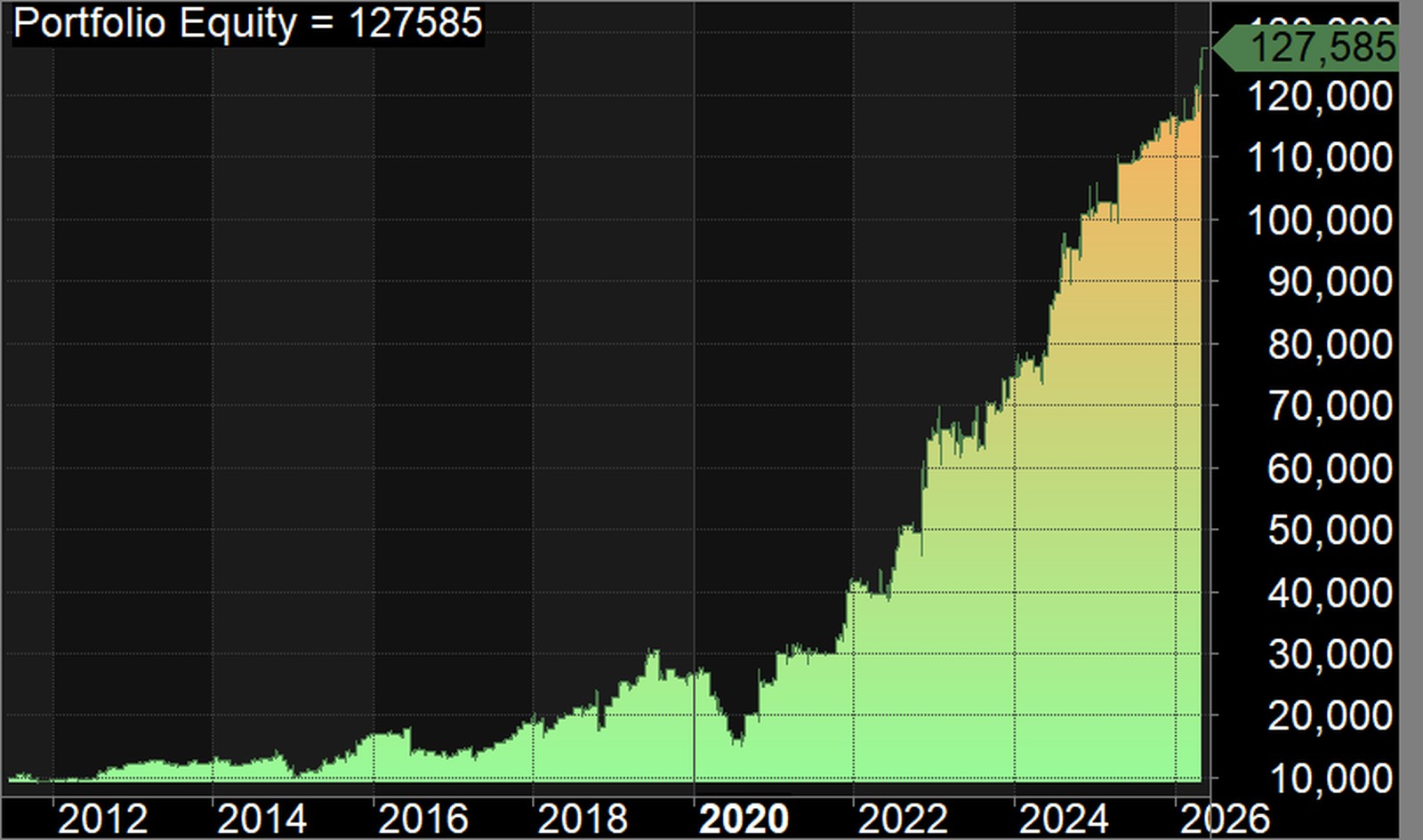 Hypothetical backtest
| Measure | BreakoutOS | AmiBroker |
|---|---|---|
| Trades | 409 | 409 |
| Win rate | 57.5% | 57.5% |
| Average trade | +$287 | +$287 |
| Net profit | +$117,585 | +$117,585 |
The same 409 trades on both platforms, with the same entries, exits and net profit. AmiBroker's chart ends at $127,585 because it includes the $10,000 starting capital. Hypothetical backtest results on both sides, not live trading. See the Hypothetical Performance Disclosure at the foot of this page.
The entry, the exit and the filters you tested in BreakoutOS, written out as AFL.
The code header spells out the session and timezone the strategy was tested on, so the trades land on the same bars.
Small gaps can still come from your data source, your database's time settings or the backtester settings. There's a guide inside BreakoutOS for tracking them down.
Systems you've written in AFL yourself, or adapted from code you found? A nice-looking backtest doesn't prove much, so import them into BreakoutOS Scale and put them through four tools.
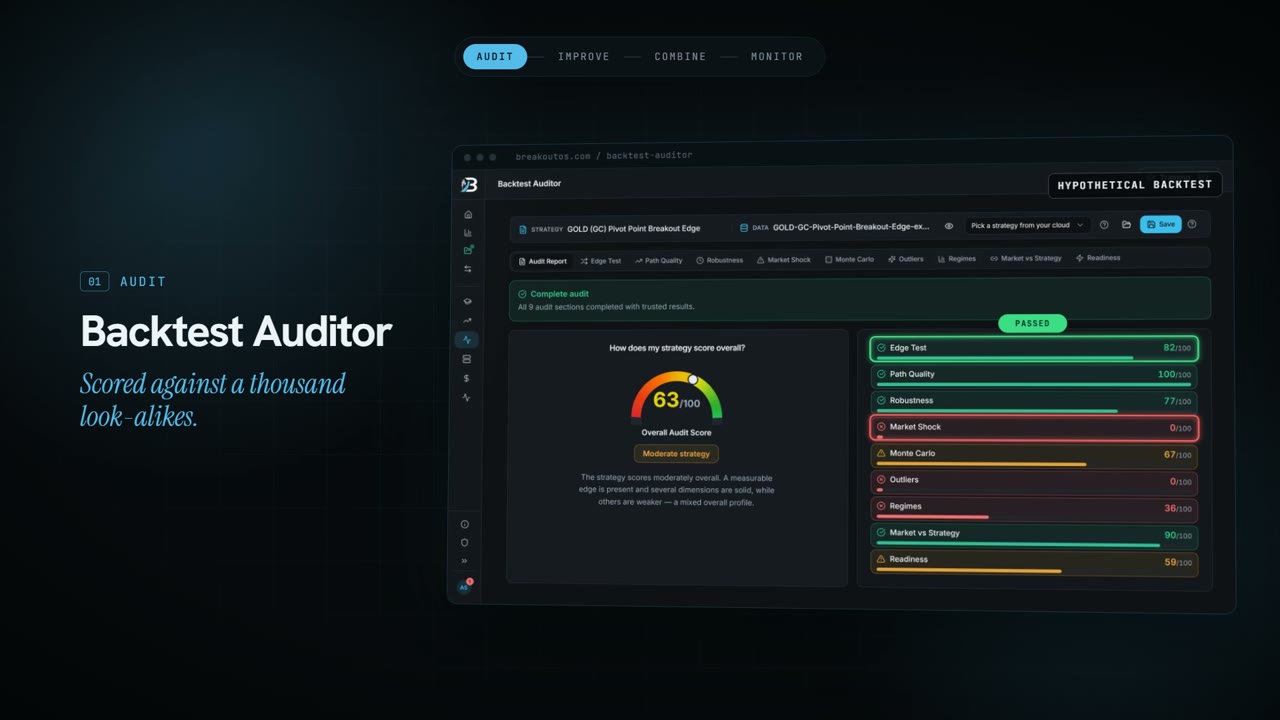
Scores your strategy against a thousand strategies with the same DNA, across nine checks.
Finds out which indicators work best for your strategy.
Combines several strategies into one portfolio, so you see how they work together.
Gives each strategy a traffic light, so you know when to keep going and when to pause.
Tell us what you're running, and the roadmap shows which of these tools to use first.
BreakoutOS does the research and the testing. AmiBroker runs the formula on your own data. Here's how the two fit together, from picking a market to monitoring a portfolio.
Score each market and session for breakout potential.
BuildGenerate tested strategy candidates, without code.
BuildPaste the AFL into AmiBroker and backtest it in the Analysis window.
AmiBrokerNine checks against a thousand look-alike strategies.
ScaleFind the indicators that work best for it.
ScaleSeveral strategies, one portfolio.
ScaleA traffic light for every strategy.
ScaleWorks across most major markets
BreakoutOS builds and tests breakout strategies on all of them. Which ones you test in AmiBroker depends on your data source.
AmiBroker can test thousands of variations in minutes, which is its strength and its trap. Five mistakes we see often:
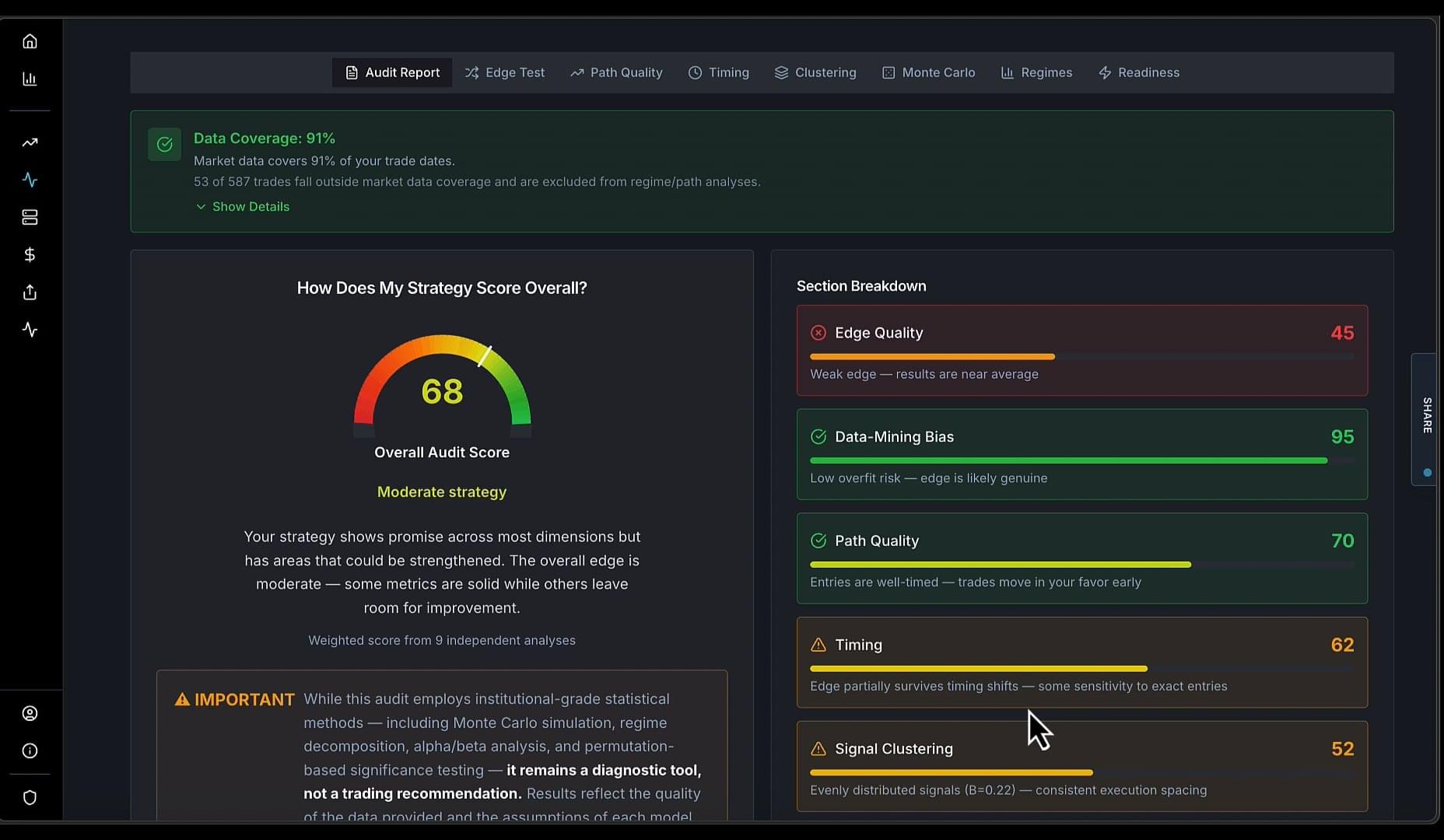
AmiBroker has walk-forward testing and Monte Carlo built in, and fast optimizers that can test thousands of variations in minutes. Test enough and some will look great by chance, and neither walk-forward nor Monte Carlo measures how much of your result is that luck.
The Backtest Auditor's data-mining bias score compares your system with a thousand systems that share its DNA.
 Hypothetical backtest
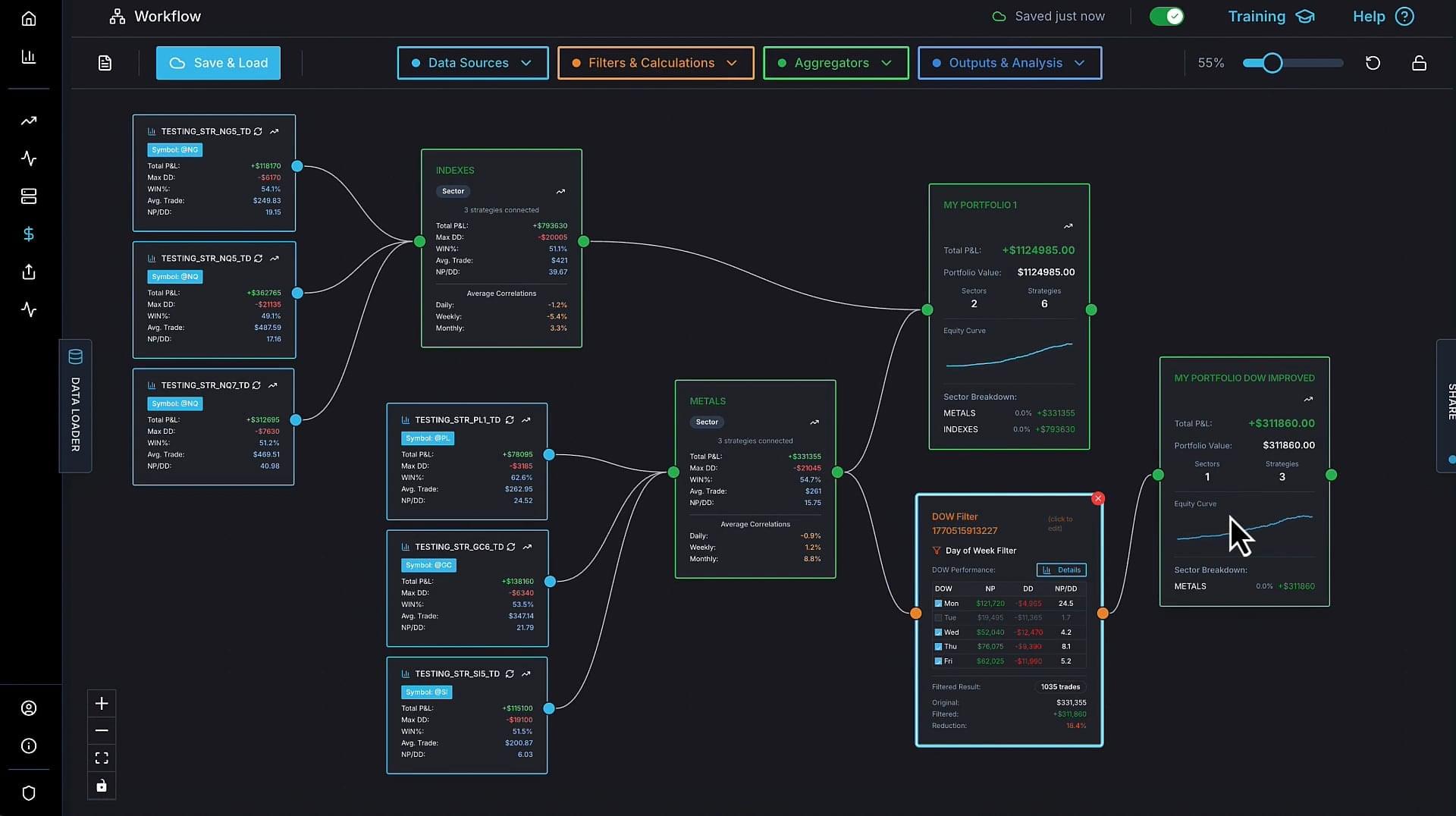
AmiBroker's portfolio backtester runs one system across a whole watchlist. Combining different systems means merging their signals into one formula or writing custom backtester code, so most traders judge each system on its own.
MQ Portfolio Builder combines systems drag-and-drop, groups them into micro-portfolios and shows how they move together.
 Hypothetical backtest
Walk-forward shows when a system made money. It doesn't show which kinds of market it made money in, so a change in conditions arrives as a surprise.
The Backtest Auditor's regimes analysis breaks your results down across nine kinds of market.
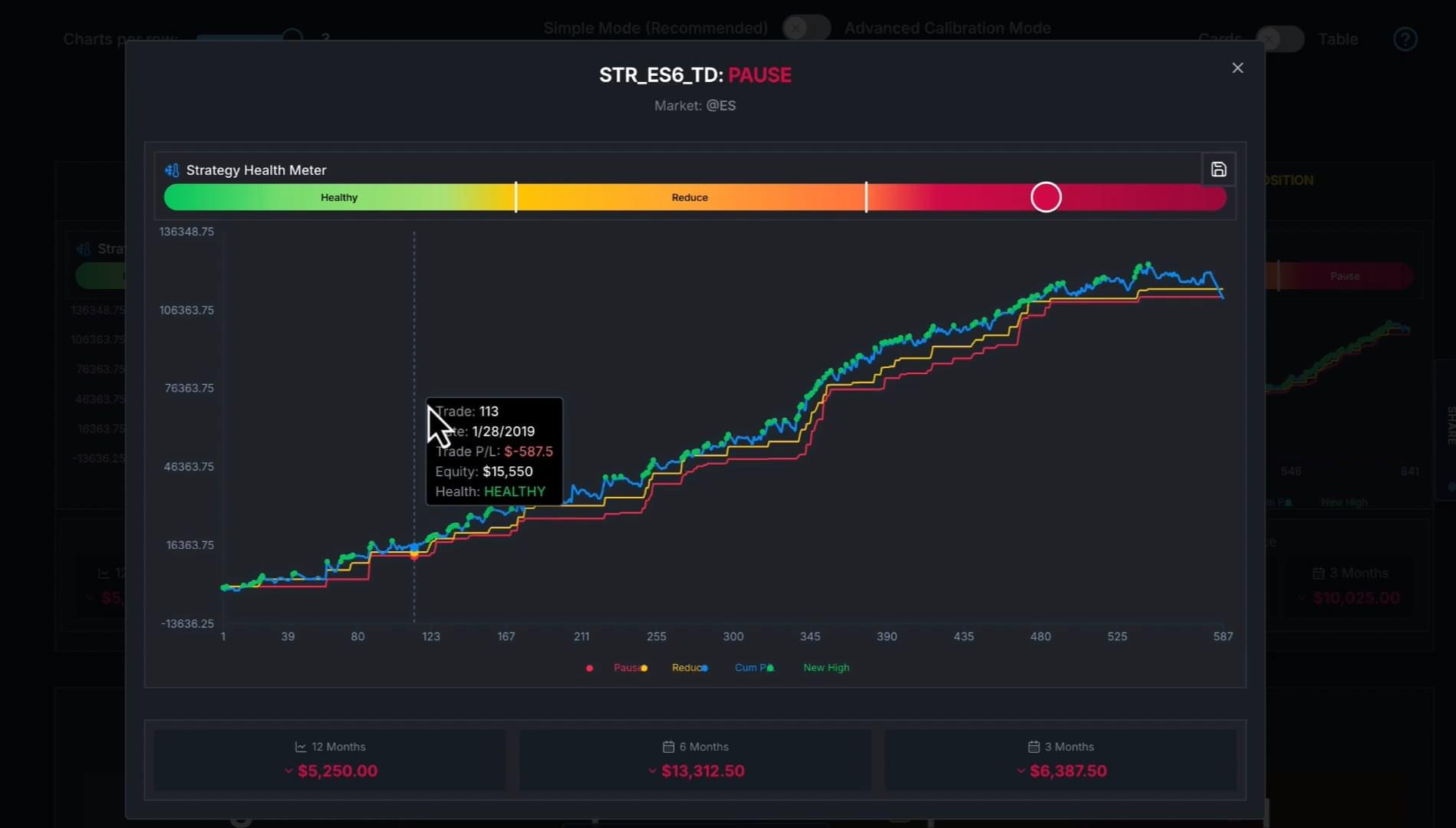
Hypothetical backtestAmiBroker tells you what a system did in the past. Once it's trading live, nothing tells you whether this drawdown is within what the backtest predicted.
The Strategy Health Monitor rates each live system green, orange or red: keep trading, watch closely and reduce size, or pause.
 Hypothetical backtest
An Exploration scans your database for today's setups. It doesn't tell you which markets and sessions have broken out cleanly over the years, which is the first decision in any breakout system.
Breakout Radar scores markets and sessions for breakout potential, and Market Mapper shows where to focus.
BreakoutOS Build has the four tools you need to go from a market to a strategy, with AFL export on every strategy you build.
BreakoutOS Scale has the tools to audit, improve, combine and monitor the strategies you've already got, plus every Build tool.
AmiBroker is a trademark of AmiBroker.com. BreakoutOS isn't affiliated with or endorsed by AmiBroker.com.
Large-sample studies: indicators, robustness and filters tested on thousands of strategies.
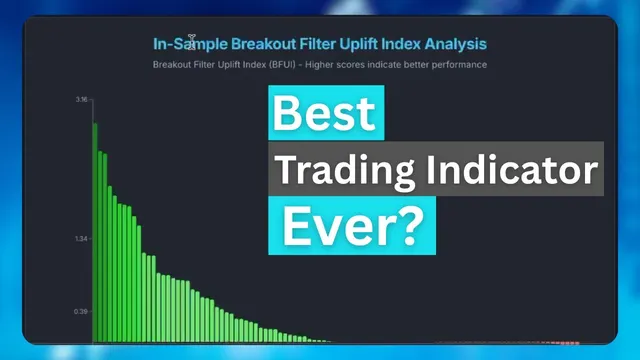
We tested 100 indicator conditions across 4,115 breakout strategies on NASDAQ and Bitcoin. ATR and volume dominate. Oscillators like RSI consistently fail.
Read the article →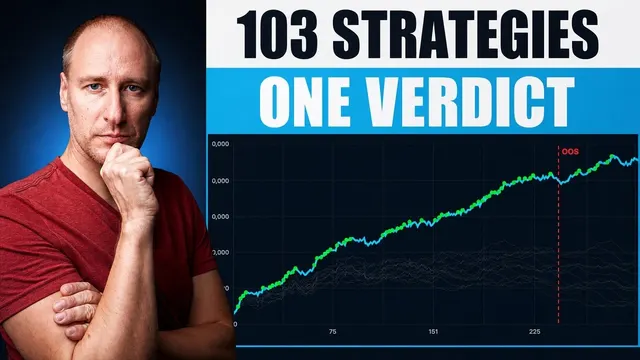
We scored 103 breakout strategies on in-sample data only. 68% scoring 65+ held up out-of-sample vs 48% below it - and 76% of those above 80.
Read the article →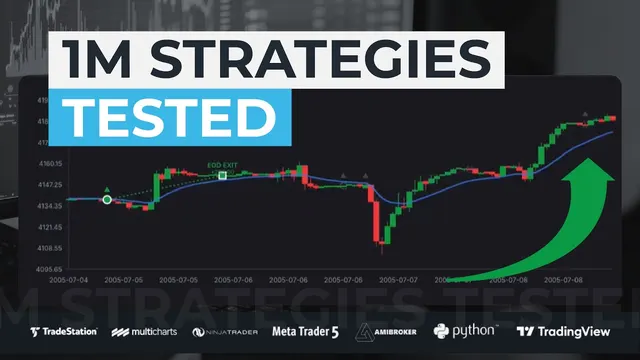
SMA and EMA filters tested across 1,000 strategies and 1,000 market conditions. Simple moving average: 83% viable. Dual EMA crossover scored highest overall.
Read the article →